E-Waste Shredders for Controlled Material Reduction
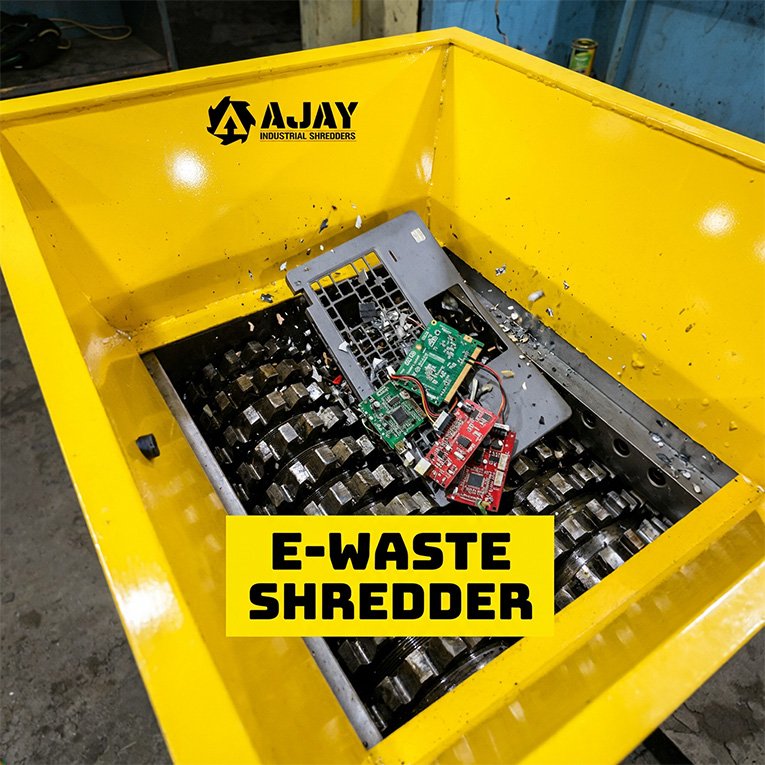
Electronic waste is a mixture of metals, plastics and boards held together in assemblies. Shredding is normally the first step towards separating those fractions.
Technical Summary
Processing objective: Controlled reduction of assemblies and housings ahead of metal and plastic separation.
Starting duty category: Medium Duty
Representative model: AIS-DS-50-H100-P
Indicative input range: 300–500 mm
Indicative output requirement: Below 150 mm
Main selection concern: Proportion of dense metal content in the stream.
Safety restriction: Lithium batteries, sealed cells and hazardous components must be removed or handled through an approved process before shredding.
Material Overview
Electronic waste covers a wide range of items, from small consumer devices to larger equipment housings and cabling. What they share is construction from several different materials fastened together, which is why reduction almost always comes before any attempt at separation.
The mix within a stream matters. A stream of plastic housings behaves differently from one carrying dense metal chassis, populated boards or wound components, and that difference shows up immediately in the cutting zone. We configure the machine against the items you actually receive.
Battery and Hazardous Component Restriction
Lithium batteries, sealed cells and hazardous components must be removed or handled through an approved process before shredding. They must not be fed into the machine as part of a general mixed e-waste stream.
Why Size Reduction Is Required
Size reduction is rarely the goal in itself. It is normally there to make the next stage work.
Waste Handling Considerations
Material mix
Metals, plastics, boards and glass in one item mean the machine sees several materials at once. The proportion of hard metal content is a key configuration factor.
Batteries and sealed cells
These must be removed or handled through an approved process before shredding. This is settled before the configuration is agreed, not afterwards.
Item size and shape
Whole appliances, loose boards and cable coils each feed differently and may need different infeed arrangements.
Downstream separation
Where magnetic, eddy current or density separation follows, the required output size is usually set by that stage rather than by the shredder.
Dust and fines
Depending on the material, dust management around the machine is considered as part of the installation design.
Configuring the Machine for Electronic Waste
Medium duty is the normal starting category, with AIS-DS-50-H100-P as a representative primary model where input runs around 300 to 500 mm and the target output is below 150 mm. Sorted, lighter e-waste in modest volumes can sit within the light duty range.
Where the stream includes dense metal content, larger equipment or extended running hours, the configuration moves towards the heavy duty range. Because e-waste streams differ so much by collection source, we ask for a description of the typical items rather than a general category name.
Mixed waste may contain incidental contaminants, but their type, size and frequency must be disclosed during selection. Oversized metal, stone and prohibited foreign objects should be removed before feeding unless explicitly approved for the agreed machine configuration.
Questions We Are Usually Asked
Related Equipment
Send Us Your Electronic Waste Requirement
Describe the material and how it arrives at the machine. Photographs help more than anything else.


