
Plastic Waste Shredder Machines for Industrial Processing
Physical form, wall thickness, piece size and feeding behaviour usually matter more than the polymer name.
Technical Summary
Processing objective: Reduction of plastic waste to a size the next process, or the disposal route, can accept.
Starting duty category: Medium Duty for regular processing, Light Duty for controlled in-house volumes
Representative model: AIS-DS-50-H100-S for packaging and plastics
Indicative input range: Confirmed after review of piece size and wall thickness
Indicative output requirement: Set by the downstream granulator, washing line or extruder
Main selection concern: Wall thickness and feeding behaviour, particularly with film and purge.
Material restriction: Metal inserts, fixings and residual product must be disclosed before configuration.
Material Overview
Plastic reaching a shredder arrives in several distinct forms, and each one behaves differently in the cutting zone. For configuration purposes, the useful information is the physical form and wall thickness rather than the polymer type alone. Two streams of the same polymer can need different machines if one is thin packaging and the other is heavy pipe.
That is why our first questions are about form and thickness. Photographs of the material as it arrives tell us more in a minute than a polymer specification does in a page.
Why Size Reduction Is Required
Size reduction is rarely the goal in itself. It is normally there to make the next stage work.
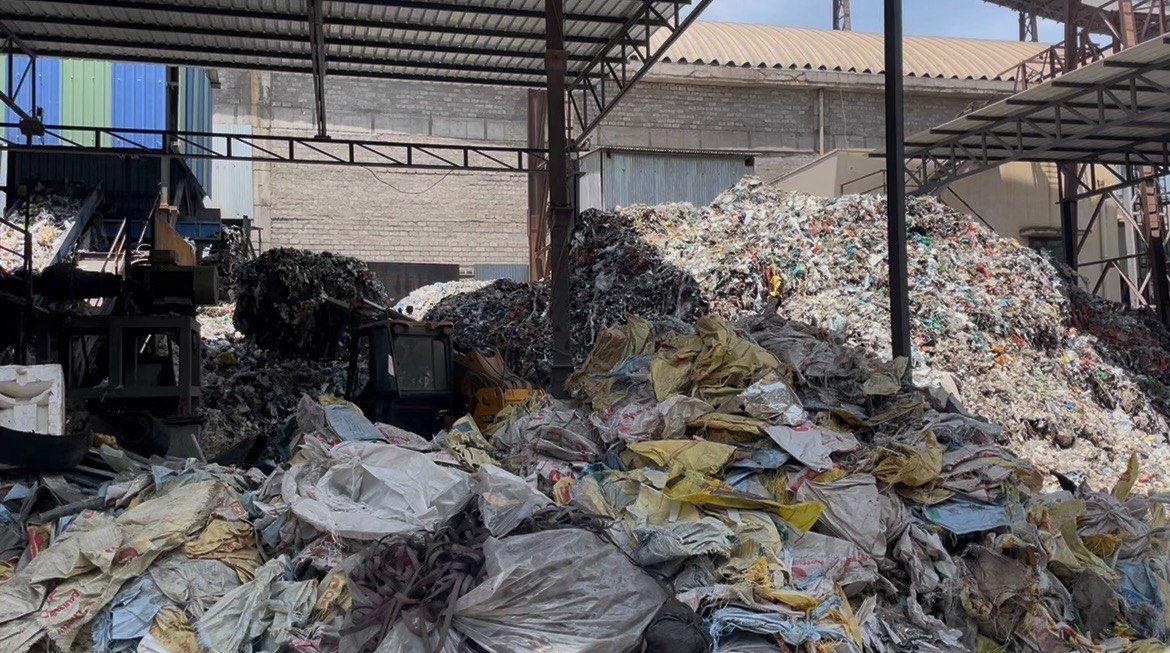
Material Forms and How They Behave
Rigid plastic
Shears cleanly and feeds predictably. Wall thickness and piece size drive the configuration more than the polymer name.
Film
Light and flexible, and can wrap around shafts depending on its form and how it is fed. Raise film specifically at the enquiry stage so it can be engineered for.
Pipe
Hard hollow sections that can roll on the hopper. Diameter, wall thickness and length all affect the infeed arrangement.
Purge
Dense, irregular and heavy for its size. Purge places a high torque demand and often shifts the configuration upward.
Moulded rejects
Behaviour varies with part geometry. Metal inserts and fixings must be disclosed before configuration.
Crates and containers
Bulky but hollow, so volume is high relative to weight. Hopper size and feed method matter more than motor rating alone.
Configuring the Machine for Plastic Waste
In-house reduction of sorted offcuts, small plastics and hard-plastic parts sits in the light duty range. Regular processing of mixed rigid plastics, packaging, crates and containers from collection or production is medium duty work, with AIS-DS-50-H100-S a representative secondary model for packaging and plastics.
Thick walled sections, drums, large pipe and extended running move the configuration towards the heavy duty range. Send photographs where possible: wall thickness and piece size are difficult to judge from a written description, and they are the two factors that most often decide the model.
Mixed waste may contain incidental contaminants, but their type, size and frequency must be disclosed during selection. Oversized metal, stone and prohibited foreign objects should be removed before feeding unless explicitly approved for the agreed machine configuration.
Questions We Are Usually Asked
Related Equipment
Send Us Your Plastic Waste Requirement
Describe the material and how it arrives at the machine. Photographs help more than anything else.


