
FRP Waste Shredder Machines for Bulky Composite Material
Fibre reinforced plastic is stiff, layered and abrasive. Those three properties shape every engineering decision about shredding it.
Technical Summary
Processing objective: Reduction of bulky composite panels, tanks and sections to a handleable size.
Starting duty category: Heavy Duty
Representative model: AIS-DS-180-H360-P
Indicative input range: 300–1500 mm
Indicative output requirement: Below 100–150 mm
Main selection concern: Abrasive wear, feed shape, embedded metal and dust.
Material restriction: Embedded metal inserts, bolts and frames must be identified before configuration.
Material Overview
FRP waste arrives as trimmings from moulding, rejected panels, tanks, pipe sections, gratings and end of life components. The material combines a resin matrix with glass or other reinforcing fibre, which makes it stiff and light but also notably abrasive.
Compared with plastic waste, FRP is less about cutting a ductile material and more about managing wear while breaking a rigid, layered structure. That distinction drives both the machine configuration and the maintenance planning we set out at handover.
Why Size Reduction Is Required
Size reduction is rarely the goal in itself. It is normally there to make the next stage work.
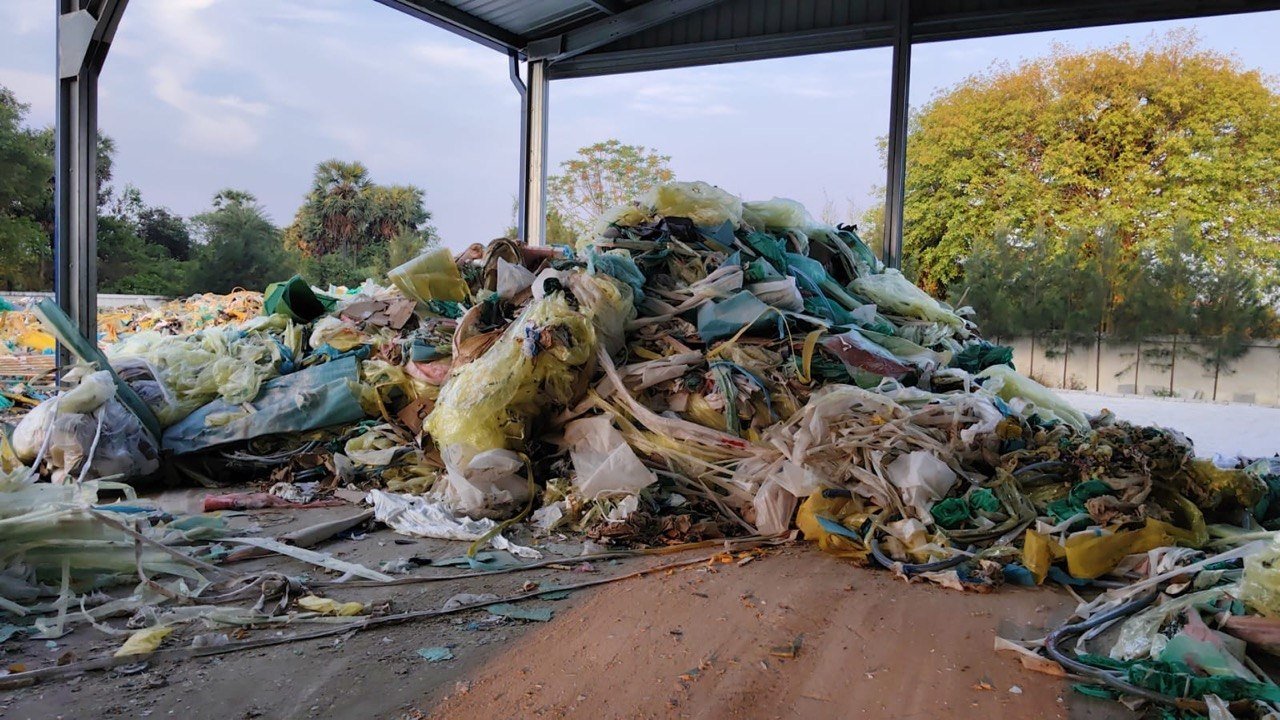
Waste Handling Considerations
Abrasive wear
Glass fibre reinforcement wears cutting components faster than most plastics. This is engineered for in the configuration and in the maintenance plan rather than discovered later.
Feed shape
Large stiff panels and sections do not fold or compress, so infeed geometry matters more than with flexible waste.
Embedded metal
Inserts, bolts and frames within FRP structures must be identified before configuration.
Dust generation
Depending on the material and the reduction required, dust control around the machine is considered as part of the installation design.
Site handling practice
Fibre containing dust calls for appropriate handling practice on site, settled alongside the equipment decision.
Configuring the Machine for FRP Waste
Heavy duty is the normal starting category for FRP, with AIS-DS-180-H360-P as a representative primary model where input runs from around 300 mm up to 1500 mm and the target output is below 100 to 150 mm.
Thin trimmings in modest volumes from a moulding operation can sit in the light duty range, and regular processing of panels and offcuts in the medium duty range. Because wear is a running cost rather than a one time consideration, we discuss FRP work in terms of both the machine and the expected maintenance pattern.
Mixed waste may contain incidental contaminants, but their type, size and frequency must be disclosed during selection. Oversized metal, stone and prohibited foreign objects should be removed before feeding unless explicitly approved for the agreed machine configuration.
Questions We Are Usually Asked
Related Equipment
Send Us Your FRP Waste Requirement
Describe the material and how it arrives at the machine. Photographs help more than anything else.


