
MSW Shredder Machines for Municipal Waste Processing
Municipal solid waste is the most variable stream a shredder is likely to see. Not all unsorted MSW is automatically suitable, so configuration follows a review of the actual stream.
Technical Summary
Processing objective: Bulk reduction and material liberation ahead of screening, separation or treatment.
Starting duty category: Medium Duty for regular processing, Heavy Duty for bulky or continuous work
Representative model: AIS-DS-75-H150-P for MSW and RDF primary reduction
Indicative input range: Confirmed after review of sorting level and bulky item frequency
Indicative output requirement: Set by the downstream screening, separation or treatment stage
Main selection concern: Sorting level, moisture, organic content and bulky items.
Material restriction: Oversized metal, stone and prohibited foreign objects must be removed before feeding.
Material Overview
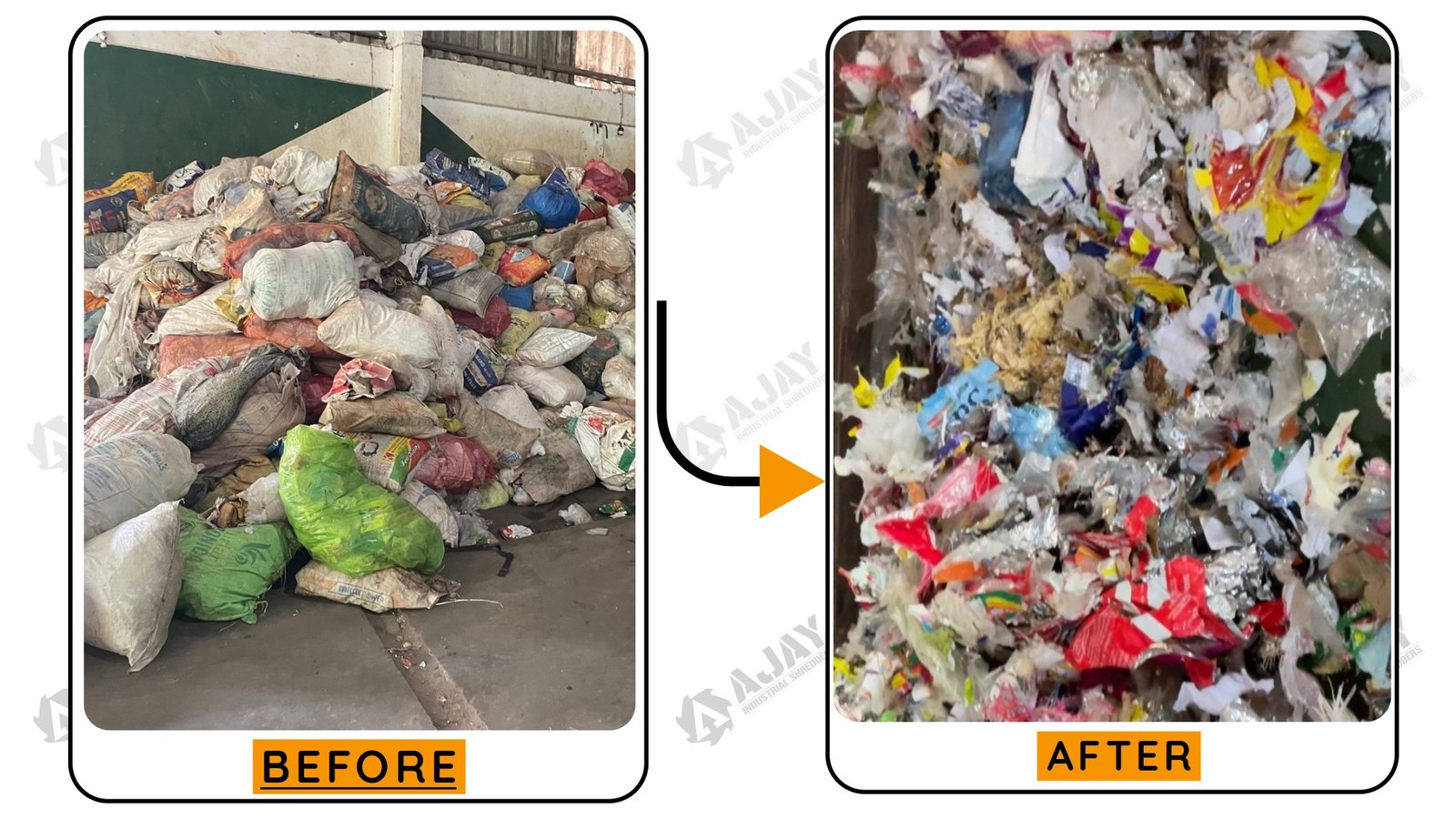
Municipal solid waste arriving at a transfer station or processing facility contains almost everything: packaging, organics, textiles, plastics, wood, metal and whatever else entered the collection system. It arrives loose, bagged or compacted, and its composition shifts with the season and the collection area.
Not all unsorted MSW is automatically suitable for shredding as received. What a machine can handle depends on the sorting level, the moisture and organic content, the contamination present, the frequency of bulky items, how consistently the material is fed, the operating hours and what the downstream process requires. Each of those is reviewed before a configuration is agreed.
Why Size Reduction Is Required
Size reduction is rarely the goal in itself. It is normally there to make the next stage work.
What the Configuration Depends On
Sorting level
Whether the stream is unsorted, partly sorted or pre-screened changes what reaches the cutting zone and therefore the duty category.
Moisture and organic content
Wet organic content affects handling, discharge and hygiene arrangements around the machine.
Contamination
Incidental contaminants must be disclosed. Oversized metal, stone and prohibited foreign objects should be removed before feeding.
Bulky items
How often large or rigid items appear in the stream is one of the main factors separating medium duty from heavy duty.
Feeding consistency
Grab, loader or heavy conveyor feeding each change how evenly the machine is loaded through a shift.
Operating hours and downstream process
Extended running and a tight downstream specification both push the configuration upward.
Configuring the Machine for Municipal Solid Waste
MSW work generally starts at medium duty, with AIS-DS-75-H150-P a representative primary model for MSW and RDF. Smaller volumes at a collection point handling partly sorted waste can sit lower in the medium duty range.
Transfer stations and processing plants running continuously on bulky, unsorted collected waste move to the heavy duty range. The light duty range is not suited to genuine mixed MSW, because the controlled-feed conditions it depends on do not hold in this stream.
Mixed waste may contain incidental contaminants, but their type, size and frequency must be disclosed during selection. Oversized metal, stone and prohibited foreign objects should be removed before feeding unless explicitly approved for the agreed machine configuration.
Questions We Are Usually Asked
Related Equipment
Send Us Your MSW Requirement
Describe the material and how it arrives at the machine. Photographs help more than anything else.


