
Double Shaft Shredders Designed and Manufactured in Bengaluru
A double shaft shredder uses two parallel shafts turning towards each other. Material is drawn into the cutting zone and reduced by shear rather than impact, which suits mixed and awkward industrial waste.
Category introduction
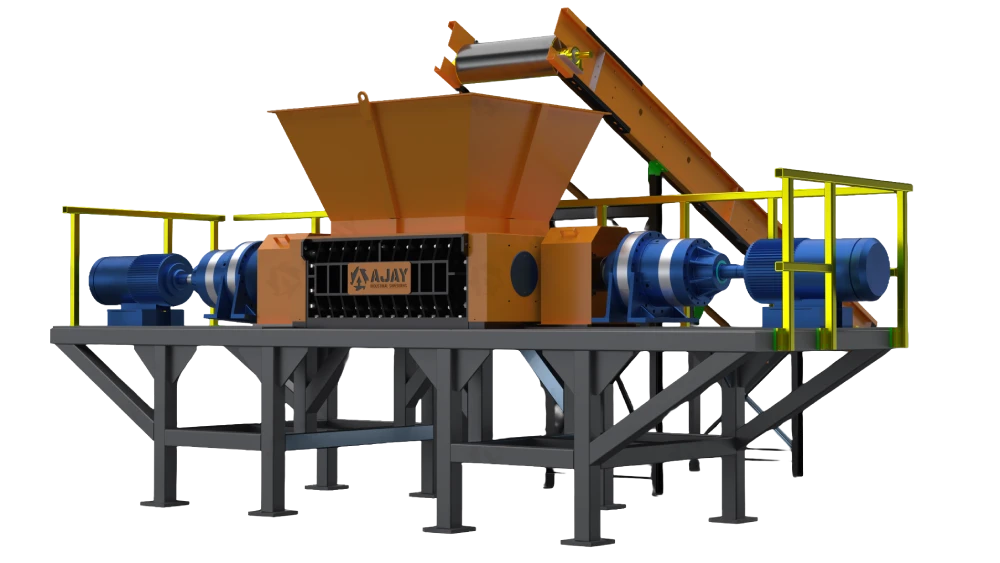
Double shaft shredding is the core of what we engineer and manufacture at Ajay Industrial Shredders. Two shafts fitted with cutters rotate at low speed towards each other, gripping material and shearing it between the discs. Because the reduction happens through cutting rather than high-speed impact, the process tends to run quieter, produce less dust and handle unevenly shaped feed better than single-rotor high-speed alternatives.
We build this equipment in three duty categories so that the machine matches the work rather than the other way round. Each machine configuration is discussed according to material type, feed characteristics, operating hours, input size, expected output and throughput requirement.
The duty category is an engineering decision about the application, not a preference. We review the material before we configure and manufacture the machine.
Suitable Waste Material Types
Double shaft shredders are used across a wide range of industrial waste streams. Suitability always depends on the specific material, so the list below describes typical use rather than a guarantee.
RDF and mixed combustible waste
Preparation of refuse derived fuel from mixed dry waste, subject to the composition of the incoming stream.
Electronic waste
Reduction of electronic assemblies and housings ahead of separation, depending on the item type and how it is presented to the machine.
Plastic waste
Rigid plastics, purge, moulded parts and film in various forms, based on feed characteristics.
Municipal solid waste
Bulk reduction of collected waste before further handling, subject to application review.
FRP and composite offcuts
Glass-reinforced sections and trimmings, where abrasive wear is designed for in advance.
Typical Application Conditions
Two sites shredding the same nominal material can need different machines. When we engineer a configuration, these are the conditions we work from.
Configuration Considerations
Material behaviour
Ductile, brittle, fibrous and layered materials behave differently in the cutting zone. Material samples or photographs help far more than a written description alone.
Duty category
Light, medium and heavy-duty categories exist because continuous work on tough feed places very different demands on a machine than intermittent work on controlled feed.
Feed method
Manual loading, hopper feeding and conveyor feeding each change how consistently material reaches the shafts, which in turn shapes how we configure the machine.
Downstream requirement
If the shredded output goes on to a second stage, the requirement is defined by what the next process needs rather than by the shredder alone.
Wear and serviceability
Abrasive material affects cutter life. We design access for inspection and cutter service into the machine and the layout rather than leaving it to the site.
Why the Application Review Comes First
Waste shredding rarely goes wrong because a machine is badly built. It goes wrong because the machine was never configured for the material in front of it. A shredder that copes easily with clean plastic offcuts may struggle with the same volume of mixed waste carrying metal fixings.
That is why we start every enquiry with questions rather than a price list. Once we understand the material, the feed method and the expected running pattern, the conversation about duty category, configuration and manufacturing scope becomes straightforward.
Mixed waste may contain incidental contaminants, but their type, size and frequency must be disclosed during selection. Oversized metal, stone and prohibited foreign objects should be removed before feeding unless explicitly approved for the agreed machine configuration.
Related Waste Applications
Other Equipment Categories
Discuss Your Shredding Requirement
Tell us what you need to reduce and how the material reaches the machine. We will engineer the configuration around it.


