
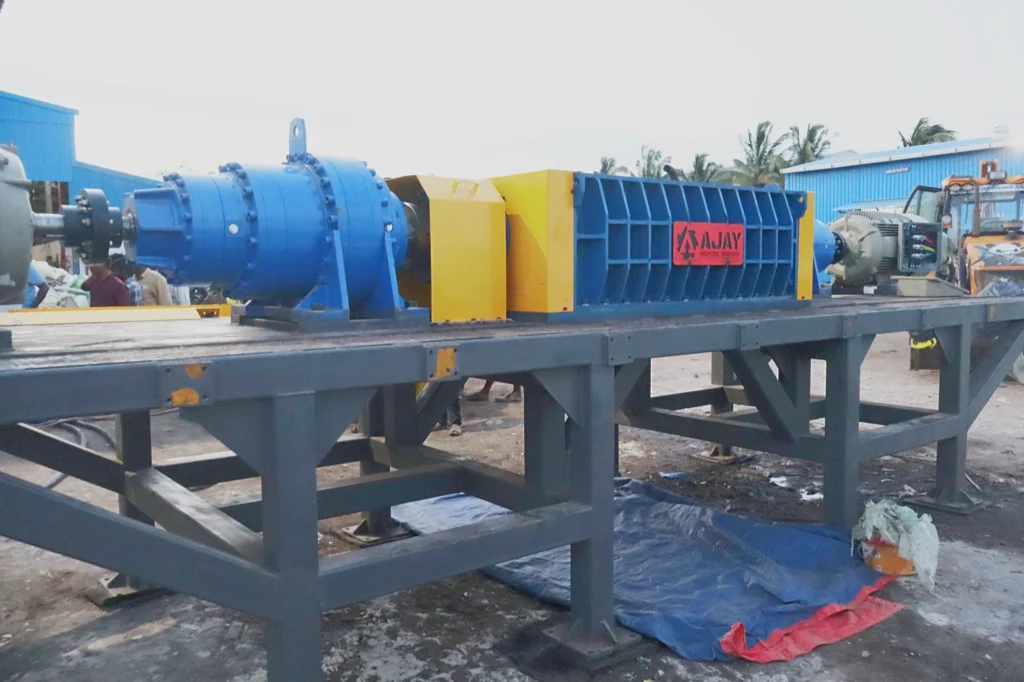
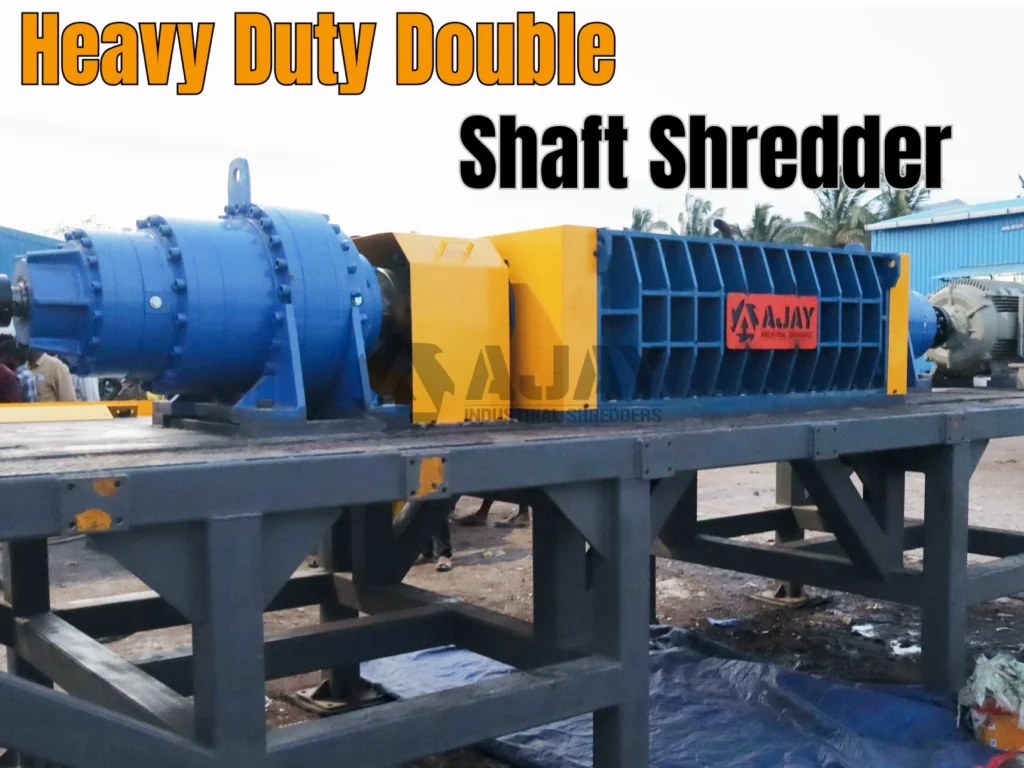
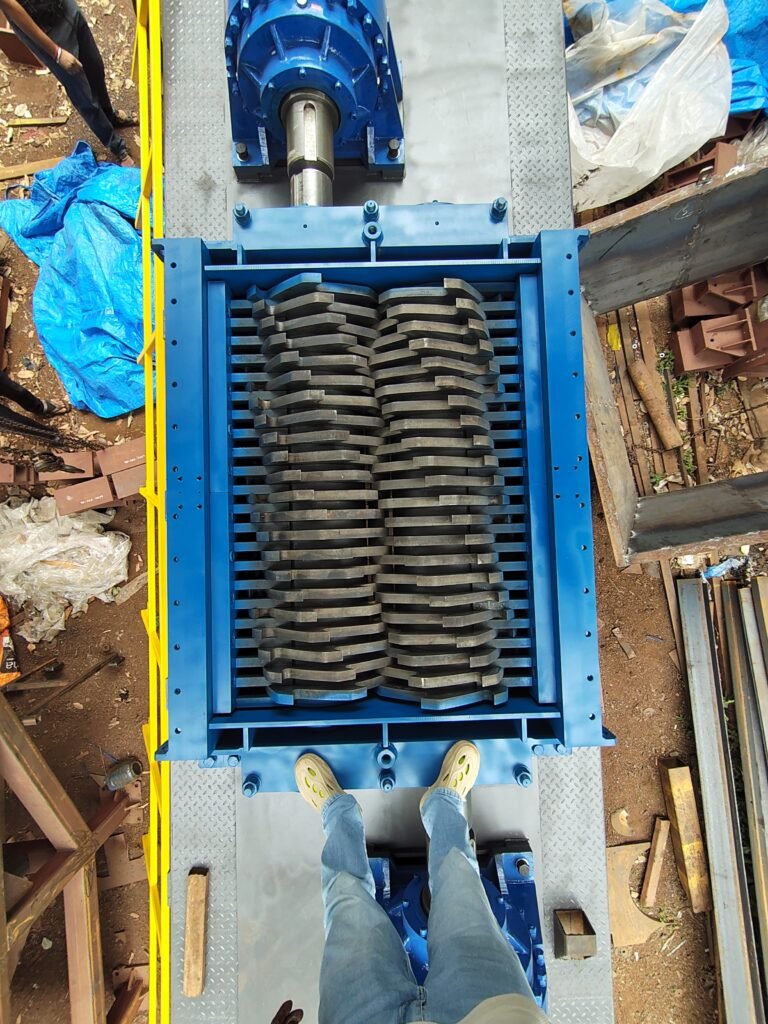
Heavy Duty Double Shaft Shredder
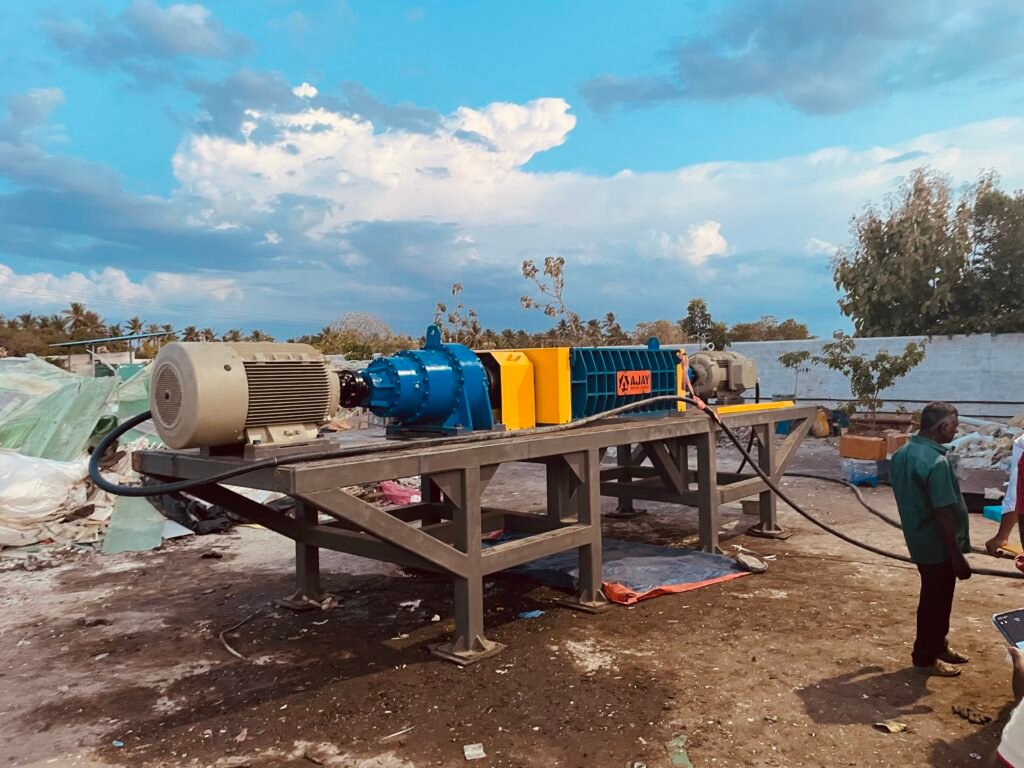
Heavy Duty is engineered for bulky MSW, heavy bulk waste, large FRP structures, and extended or continuous operation under demanding feed conditions.
Category introduction
The Heavy Duty range is engineered for bulky municipal solid waste, heavy bulk waste, tyres and rubber where approved for the agreed configuration, large FRP structures, and extended or continuous operation under demanding feed conditions.
In these settings the shredder is central to a process rather than a support to it. Material arrives bulky, mixed and often unsorted, so the engineering conversation focuses as much on what should not stop the machine as on what it is expected to process.
In continuous operations, the question is rarely whether a machine can shred the material once. It is whether it can keep doing so, shift after shift, on feed that varies.
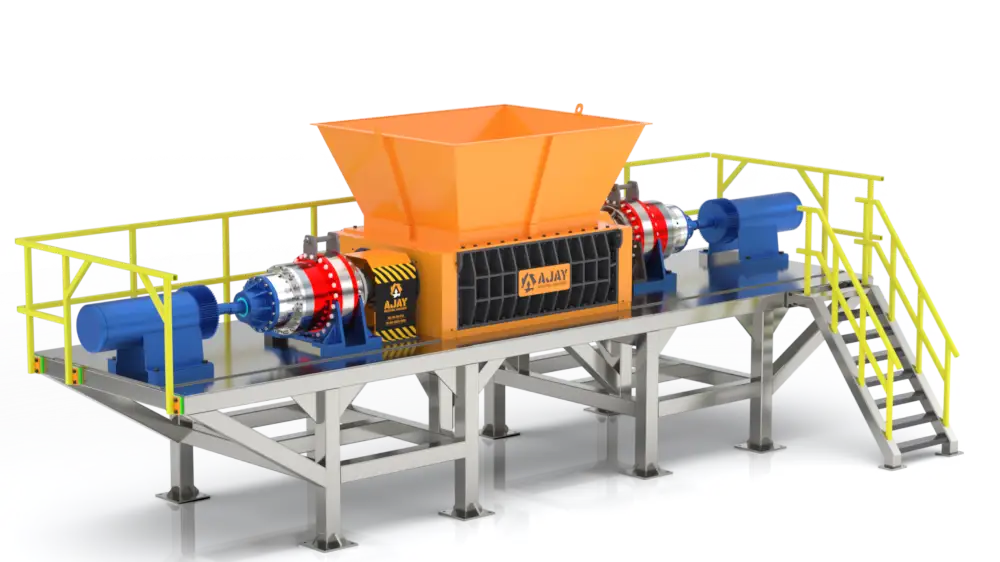
Heavy Duty Models
Every throughput figure below is indicative. Final specifications follow application review and approved technical drawings.
|
Model |
Stage |
Motor |
Total HP |
Indicative throughput |
Typical application |
Shaft speed |
|---|---|---|---|---|---|---|
|
AIS-DS-150-H300-P |
Primary |
150 HP × 2 |
300 |
10–12 t/h |
Tyres, bulky MSW and bulk waste |
26 RPM |
|
AIS-DS-150-H300-S |
Secondary |
150 HP × 2 |
300 |
8–10 t/h |
Rubber and RDF refining |
26 RPM |
|
AIS-DS-180-H360-P |
Primary |
180 HP × 2 |
360 |
12–15 t/h |
Large MSW, heavy bulk waste and FRP |
25 RPM |
|
AIS-DS-180-H360-S |
Secondary |
180 HP × 2 |
360 |
10–13 t/h |
High-volume granulation |
26 RPM |
Capacities are indicative and depend on material composition, density, moisture, contamination, input size, cutter configuration, feeding consistency and operating conditions. Final specifications are confirmed after application review, trial-material or site assessment where required, and approved technical drawings.
Suitable Waste Material Types
Materials commonly configured for the heavy duty range. Tyres and rubber are processed only where approved for the agreed machine configuration.
Bulky municipal solid waste
Unsorted or partly sorted collected waste in bulk, subject to what the stream contains.
Heavy bulk waste
Large and awkward industrial items where piece size drives the configuration.
Tyres and rubber
Processed where approved for the agreed configuration, following material review.
Large FRP structures
Panels, tanks and sections where both size and abrasive wear are engineered for.
RDF refining at volume
Continuous secondary reduction to a downstream fuel specification.
Typical Application Conditions
The heavy duty range is normally the right starting point where the following apply.
Configuration Considerations
Continuity requirement
How much unplanned downtime the operation can absorb shapes the configuration more than any single material property.
Worst case feed
Configuration is based on the hardest and largest material the machine will realistically encounter, not on the average day.
Plant integration
Infeed and discharge arrangements, conveyor heights and downstream equipment are settled in the technical drawing alongside the machine.
Maintenance access
Long running hours make routine inspection and cutter service part of normal operation. Access is designed in, not worked around.
Operator team
Who runs and maintains the machine shapes the operator guidance we provide at installation.
Why the Application Review Comes First
Heavy duty projects usually involve more than the shredder. Infeed, discharge, downstream separation and the plant layout all influence what the machine has to do, and a configuration made in isolation tends to create problems at commissioning.
Share the material, the plant context and the operating pattern. That gives us enough to engineer a sensible configuration with you, subject to material review and site assessment.
Mixed waste may contain incidental contaminants, but their type, size and frequency must be disclosed during selection. Oversized metal, stone and prohibited foreign objects should be removed before feeding unless explicitly approved for the agreed machine configuration.
Related Waste Applications
Other Equipment Categories
Discuss Your Shredding Requirement
Tell us what you need to reduce and how the material reaches the machine. We will engineer the configuration around it.


